World Premiere in Tasmania: Largest Battery-Electric Ship in the World Begins Test Operations at Incat
Derwent Park/Hobart (Australia) – The Australian shipbuilder Incat has achieved a major technological milestone for the electrification of shipping with the successful commissioning of the world’s largest battery-electric ship. With major orders from Europe as well, the company is making waves.
World Premiere in Tasmania: Battery-Electric Large Ship Begins Test Operations
On December 14, 2025, Incat Tasmania in Derwent Park near Hobart made maritime history. With the successful first electric motor test run of “Hull 096,” the world’s largest battery-electric ship built to date officially entered test operations. The 130-meter high-performance catamaran can carry up to 2,100 passengers and more than 220 vehicles, making it also the largest electric vehicle in the world.
At the heart of the ship is an energy storage system with more than 250 tons of batteries and an installed capacity of over 40 megawatt-hours. This makes the battery system about four times larger than any previous maritime installation.
In front of invited guests from politics and business, Incat Chairman Robert Clifford demonstrated the performance of the battery-electric waterjet propulsion system. “This is the first time a ship of this size, anywhere in the world, has been trialled under 100 percent battery-electric propulsion. It’s a remarkable achievement by our workforce and a turning point for shipbuilding. Tasmania has been at the forefront of international aluminium shipbuilding for decades, and today’s milestone shows we are now leading the world in the next era – sustainable, high-performance vessels at scale,” Clifford commented on the commissioning.
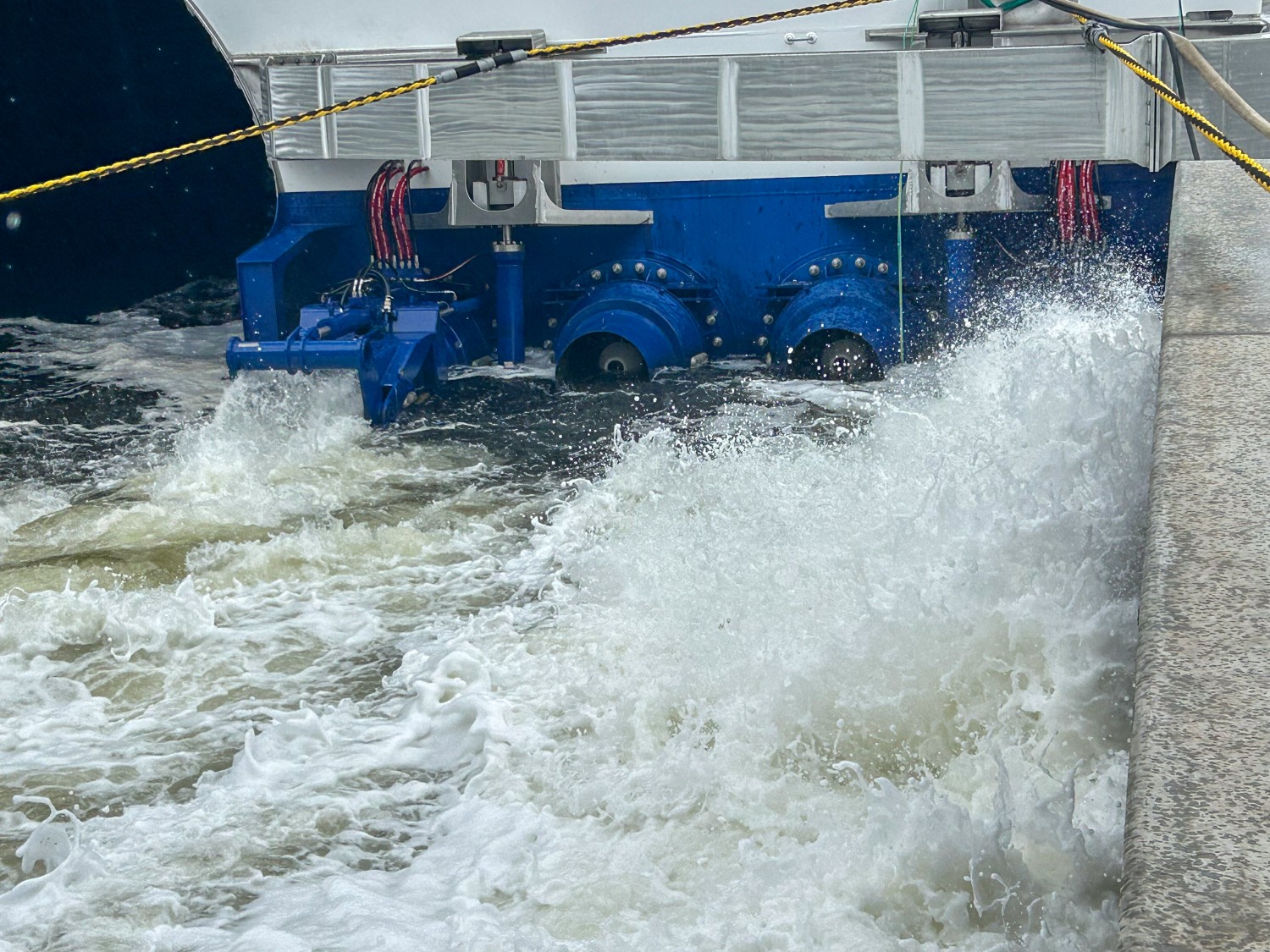
The current test was the first in a series of trials for the ferry before it is transferred to South America in the coming months. There, “Hull 096” will operate between Buenos Aires (Argentina) and Montevideo (Uruguay) as part of its service.
Major Order from Denmark: Electric Ferries for Europe’s Key Route
Almost simultaneously with the world premiere in Tasmania, Incat secured a strategic major order last year for two more large ferries based on the same technology class. The client is the Danish ferry operator Molslinjen, who plans to deploy the two battery-electric ferries on the heavily trafficked Kattegat route between Jutland and Zealand, one of Europe’s most important ferry corridors.
The ferries will be equipped with battery systems of around 45 megawatt-hours and are expected to carry up to 1,483 passengers and 500 vehicles each, at speeds of over 40 knots. The CO2 savings are expected to amount to several thousand tons annually.
To meet the growing demand for emission-free large ferries, Incat plans a major expansion of its shipyard at Prince of Wales Bay. Over the next three years, production capacity and workforce are set to grow significantly. The goal is to deliver several large ferries per year in the future – a crucial response to the worldwide increasing demand for sustainable ship propulsion.
Source: IWR Online, 06 Jan 2026
