British Nuclear Power Plant Hinkley Point C Faces Further Delays and Rising Costs - Nuclear Power Costs at Least 15 Cents per Kilowatt-Hour
Paris (France) / London (UK) - The French energy supplier EDF has once again postponed the completion of the British nuclear power plant Hinkley Point C (HPC). The first reactor of the 3.2 GW nuclear power project in Somerset is now expected to begin operations in 2030, five years later than originally planned.
Construction of Hinkley Point C will take at least 13 years
In a statement dated February 20, 2026, the French energy group EDF confirmed further delays as well as additional cost increases for the large-scale project. Construction of Hinkley Point C began in 2017. The original commissioning of the first unit was scheduled for 2025. In the meantime, the date was first postponed to 2027, then to 2029, and now to 2030. This means that the construction period of the nuclear power plant will amount to at least 13 years.
EDF cites lower productivity in complex electromechanical installation work, particularly in piping and cabling, as reasons for the delay. According to the company, the one-year delay will burden EDF’s balance sheet by around €2.5 billion. Should the start of operations be further postponed to 2031, additional financial burdens amounting to billions could arise.
According to the state-owned French nuclear group, the repeated schedule delays reflect the complex project implementation, technical challenges, and rising costs associated with the large-scale project.
Estimated construction costs have now risen to £35 billion (in 2015 prices). In current prices, this corresponds to around £48 billion. Converted using the official ECB reference exchange rate of approximately £1 = €1.15 (February 23, 2026), this amounts to about €55 billion.
The project comprises two reactor units, each with a capacity of 1,600 megawatts. The two units are to be commissioned at different times. The stated figure of approximately €55 billion refers to the overall project. Arithmetically, this currently corresponds to around €27.5 billion per 1,600 MW unit. However, this is explicitly an interim figure, as further cost increases during the ongoing construction work cannot be ruled out.
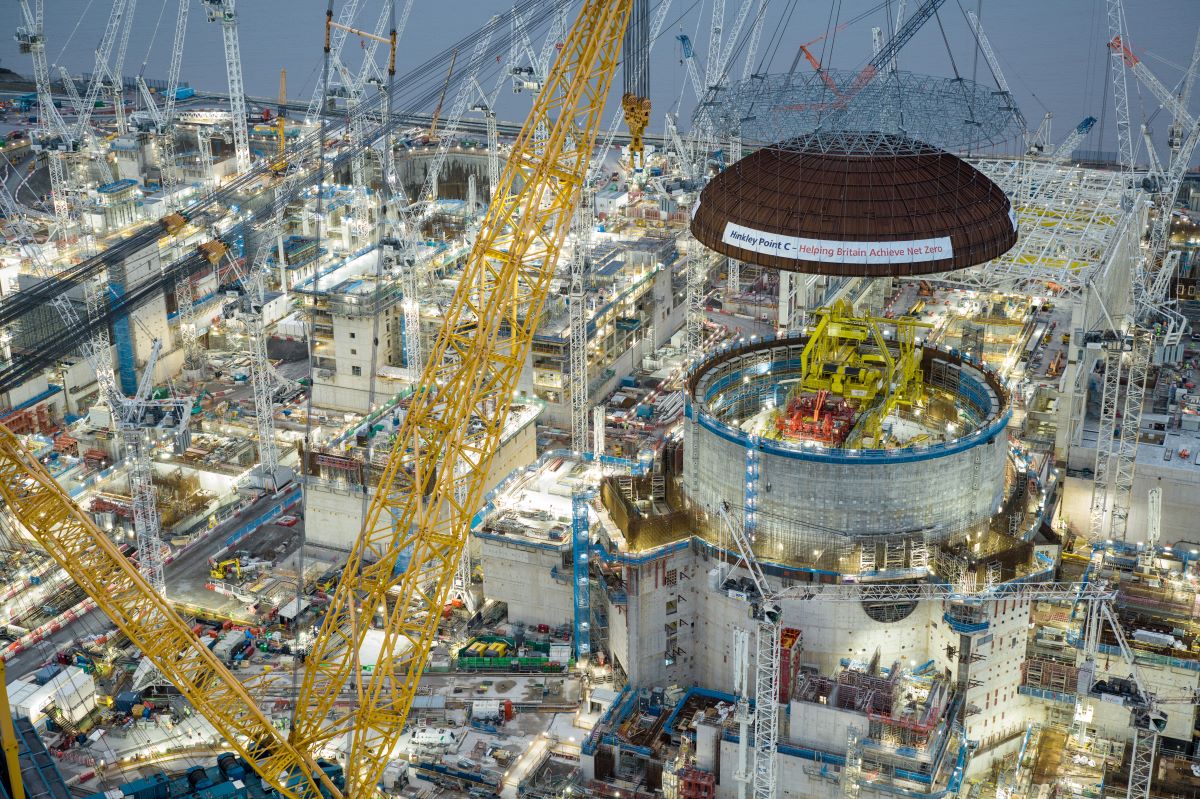
British nuclear power costs at least 15 cents per kilowatt-hour with long-term price indexation over 35 years
The Hinkley Point C nuclear power plant is backed by a government-guaranteed feed-in tariff (Contract for Difference, CfD). The so-called strike price currently stands at £127/MWh (as of January 17, 2026), which corresponds to just under 15 cents per kilowatt-hour. If the market price for electricity on the power exchange falls below this guaranteed price, the difference is compensated through government payments.
The minimum remuneration for British nuclear power is linked to inflation and is therefore structured dynamically. It is adjusted based on the UK Consumer Price Index (CPI) and rises in line with price developments. The duration of the guaranteed remuneration for nuclear power from Hinkley Point C is 35 years. By comparison, in Germany the Renewable Energy Sources Act (EEG) remuneration is generally granted for 20 years and is provided without inflation adjustment.
Source: IWR Online, 24 Feb 2026
